
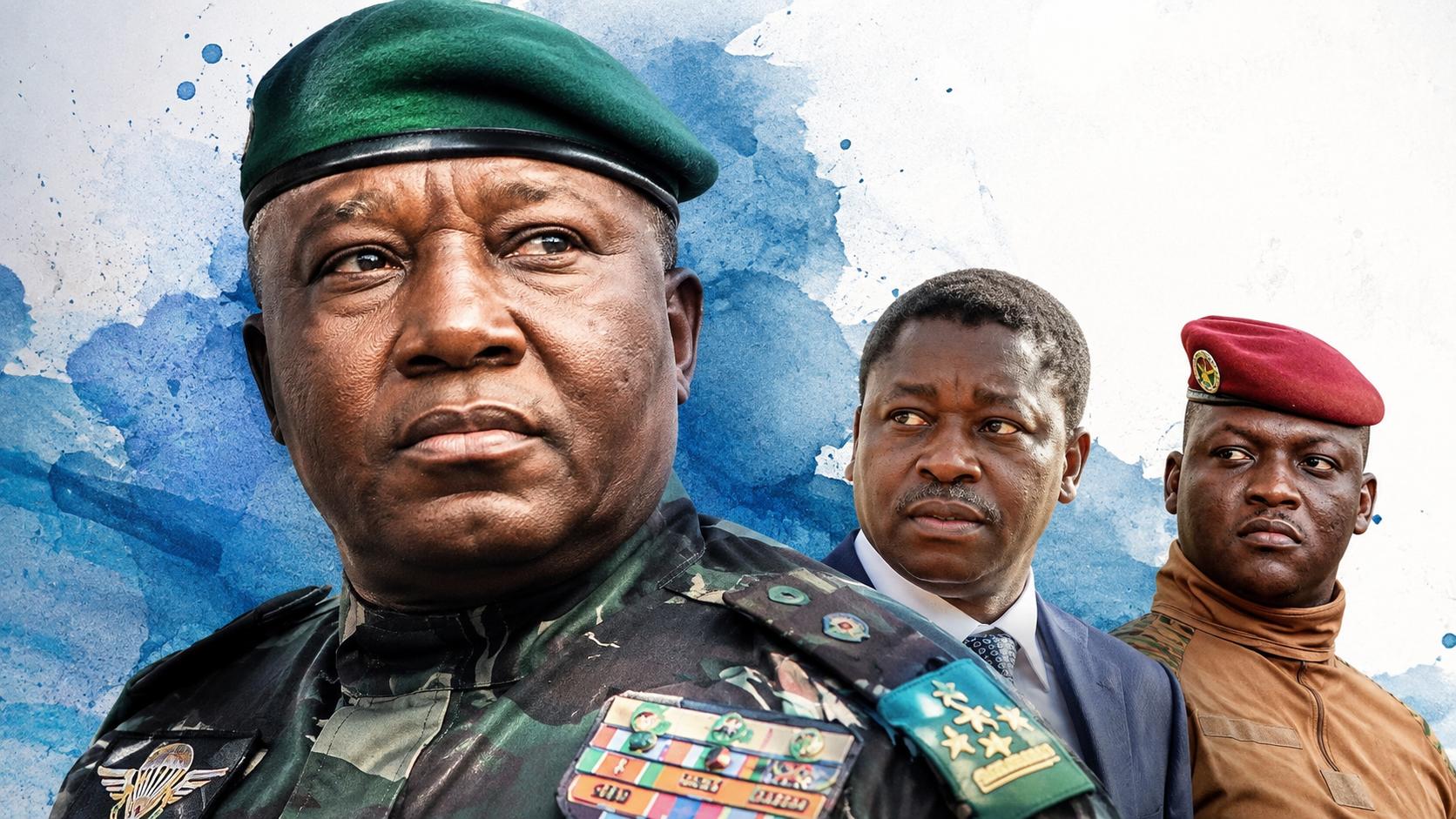
The turmoil that recently engulfed Niamey has sent shockwaves far beyond Niger’s borders, serving as a stark warning to neighboring allies. Heavy gunfire and escalating tensions that destabilized General Abdourahamane Tiani’s regime have exposed vulnerabilities the official narrative tried to conceal. Yet this crisis isn’t confined to Niger—it casts a looming shadow over two of its closest partners in the region: Captain Ibrahim Traoré in Burkina Faso and Faure Gnassingbé in Togo. The fallout from Niger’s unrest underscores why these leaders have every reason to fear mutiny or even a coup attempt.
Burkina Faso’s military faces an ever-present threat
For Ibrahim Traoré, the danger isn’t hypothetical—it’s an everyday reality. Burkina Faso’s government operates under a cloud of relentless suspicion. The regime in Ouagadougou has repeatedly faced thwarted destabilization plots within its own armed forces, including failed attempts in early 2026 and late 2023, leaving the country’s leadership precariously balanced.
As Niamey descended into the chaos of nighttime clashes, Ibrahim Traoré glimpsed his own reflection. The same factors threatening Tiani’s grip on power are mirroring the situation in Burkina Faso:
- Exhausted troops: Despite nationalist rhetoric, the relentless pressure on the security front continues to exact a brutal toll. The rank-and-file’s frustration over unmet promises fuels the tinderbox of discontent that could ignite mutinies.
- Fractured factions: Repeated purges within Burkina Faso’s military and the heavy reliance on the Volontaires pour la Défense de la Patrie (VDP) have widened the divide between loyalist officers and the rest of the army. The risk of dissident factions turning their weapons inward has never been higher.
Togo’s leadership scrambles to secure its grip
While Togo’s crisis may appear less visible, the unease at the highest levels of power is just as palpable. The timing of Faure Gnassingbé’s drastic reshuffle in August 2026—overhauling military leadership and intelligence services—was no mere administrative move but a desperate act of self-preservation.
This high-stakes game of musical chairs at the top reveals deeper anxieties:
- Garrison discontent: Togo’s perceived or real involvement in regional geopolitical maneuvers and the deteriorating security climate in the North—particularly around the Koundjoaré operation—have stoked tensions within the command structure.
- Palace paranoia: When a leader hastily replaces army and intelligence chiefs, it signals a crisis of loyalty. Faure Gnassingbé understands that the contagion of coups doesn’t respect borders, and Togo’s military, historically a kingmaker, remains an unpredictable force.
Regional instability’s domino effect
By co-sponsoring destabilization tactics across the region and wagering on force to push their agendas, the Niamey-Ouagadougou-Lomé axis has played with fire. The events in Niamey on August 29 serve as a grim reminder: when military power is weaponized for political ends, the chain of command collapses, and the institution spirals out of control.
The lesson is clear—violence begets violence. Ibrahim Traoré and Faure Gnassingbé now face an unrelenting countdown. Until legitimacy is rooted in institutional stability rather than the barrel of a gun, every night in their capitals carries the bitter taste of a potential mutiny.