
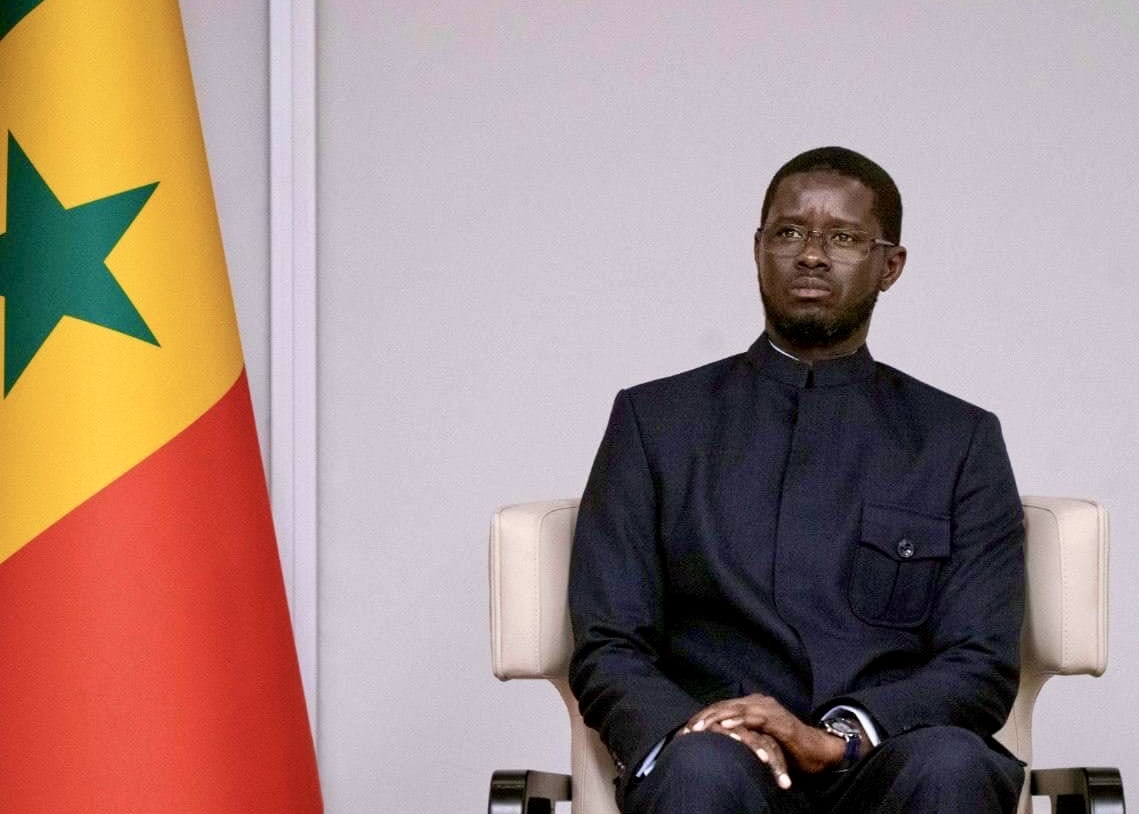
The Birth of a New Political Era in Senegal
The President of Senegal, Bassirou Diomaye Faye, has marked a definitive chapter in the nation’s political landscape by launching a groundbreaking political party named Kiiraay. This bold move, unveiled on a scorching Saturday in Dakar, signals a clear break from his former mentor and ex-Prime Minister, Ousmane Sonko, who once played a pivotal role in Faye’s rise to power in 2024.
Faye, who took office as president, initially appointed Sonko as Prime Minister, but their once-close alliance crumbled over time. Tensions escalated, culminating in Sonko’s dismissal from the prime ministership in May of this year.
A Party Rooted in Values
The launch event, held in a packed conference hall in Dakar, drew hundreds of enthusiastic supporters. Those unable to secure seats gathered outside under the relentless sun, waving banners and wearing scarves emblazoned with slogans like “Long Live Diomaye.” The new party, Kiiraay, derives its name from the Wolof language, meaning “protection” or “shield,” reflecting its mission to safeguard the nation’s interests. Its guiding principles, as outlined by Faye, are “republic, ethics, transparency, brotherhood, and diligence.”
One attendee, Mamo Khady Sall, a 43-year-old resident of Yeumbeul, a suburb of Dakar, expressed her unwavering support for Faye, describing him as “a man of peace.” She made no effort to conceal her disdain for Sonko, refusing even to utter his name. Her sentiment mirrored that of many young Senegalese who were initially drawn to Sonko’s panafricanist rhetoric and his battle against former President Macky Sall, who governed from 2012 to 2024.
Sonko and Faye had campaigned on a platform of transformative change, vowing economic renewal, social justice, and an unyielding fight against corruption. However, Faye openly acknowledged that the desired reforms were unattainable within the constraints of their former party, Pastef.
Political Dominance and Upcoming Challenges
At the launch, Faye boldly declared, “Kiiraay is the majority party in this country.” The event drew a diverse crowd, including mayors, sector leaders, and civil society figures, many of whom had recently defected from Pastef to join the president’s new movement. According to Faye’s communications team, the party will hold its inaugural congress after the summer rains subside.
Faye’s presidency owes much to Sonko, who might well have been elected president himself in 2024 had he not been barred from the race due to a defamation conviction. The rift between the two deepened over disagreements on tackling Senegal’s mounting public debt and other critical policy issues. The final rupture came in May when Faye removed Sonko from his prime ministerial post. In response, Sonko’s allies swiftly elected him President of the National Assembly, where he remains the unchallenged leader of Pastef, which commands a majority of 130 seats in the 165-seat unicameral parliament.
The National Assembly had recently passed a controversial bill aimed at curtailing presidential powers, including a provision preventing the president from leading a political party or coalition. However, the Constitutional Council struck down the measure less than two weeks later.