
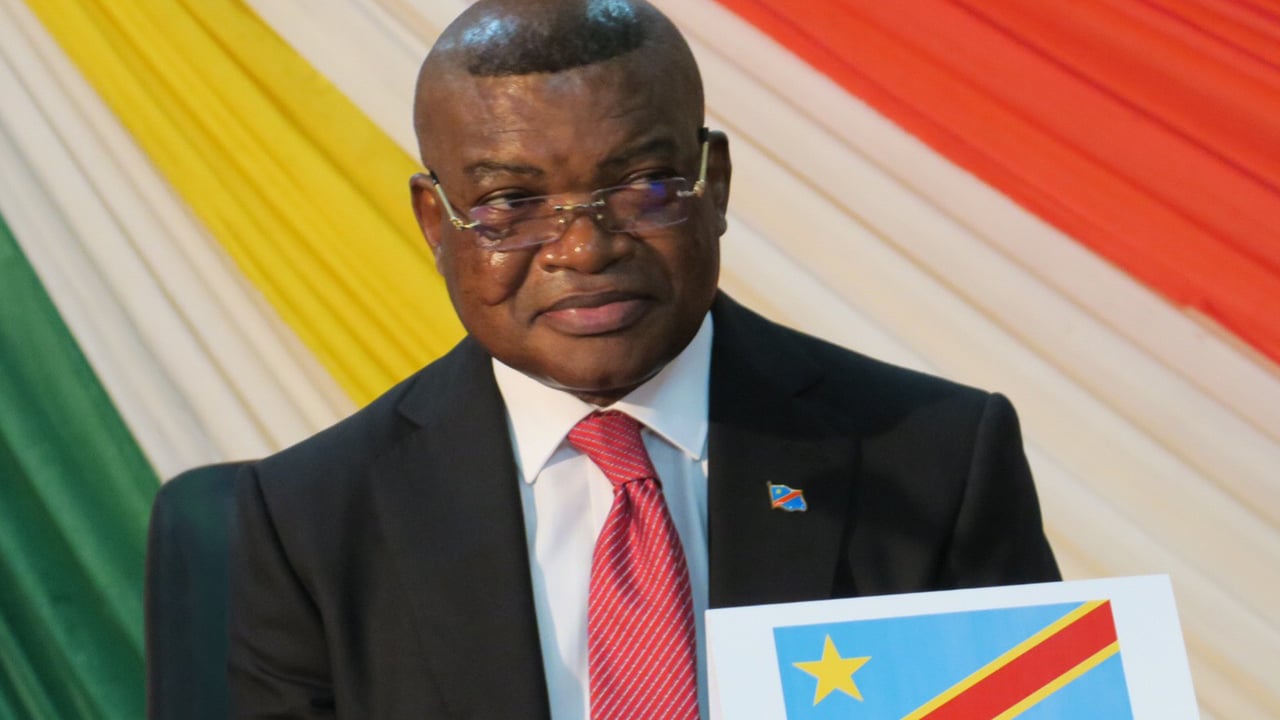

Why Kalev Mutond’s passing exposes deeper fault lines in Congo’s security structure
The sudden death of Kalev Mutond, former director-general of the DR Congo’s intelligence services, has sent shockwaves through Kinshasa’s political and security elite. Behind the official statements and condolences lies a more complex reality: the passing of such a polarizing figure has laid bare the fragility of an institution still wrestling with its own contradictions. Mutond, whose tenure was marked by both fierce loyalty to the presidency and accusations of human rights violations, leaves behind a vacuum that may reshape the balance of power within Congo’s sprawling intelligence network.
The man who shaped Congo’s intelligence landscape
Kalev Mutond’s career spanned decades in some of the most sensitive roles within the Agence Nationale de Renseignements (ANR). Appointed as director-general in 2013, he became the face of a security apparatus that expanded its influence far beyond conventional intelligence gathering. Under his leadership, the ANR cultivated a reputation for penetrating political opposition circles, monitoring dissent, and shaping the narrative around national security.
Mutond’s influence extended into the corridors of power. His close association with former President Joseph Kabila ensured that the intelligence agency operated as a key pillar of the regime’s survival strategy. Reports from multiple diplomatic sources—later corroborated by internal leaks—detailed his role in suppressing protests, tracking opposition figures, and coordinating with parallel security forces during tense electoral periods.
Controversies that defined his tenure
- Human rights allegations: Human rights organizations documented cases of arbitrary arrests, enforced disappearances and torture linked to operations allegedly authorised or overseen by Mutond. These accusations remained largely unaddressed, with the government citing national security as justification.
- Political interference: Critics accused Mutond of instrumentalizing intelligence operations to neutralize political rivals rather than protect citizens from genuine threats. His agency became synonymous with selective enforcement, targeting perceived enemies of the state while overlooking corruption within allied factions.
- Internal power struggles: Sources within the intelligence community indicate Mutond’s aggressive expansion of the ANR’s purview triggered resistance among other security agencies. Tensions with military intelligence and the police’s Directorate for General Intelligence reportedly simmered for years, occasionally erupting into jurisdictional disputes.
Congo’s intelligence landscape after Mutond: what changes?
The death of a figure as dominant as Mutond does not merely represent a personnel change—it signals a potential inflection point for Congo’s entire security architecture. The ANR’s future direction now depends on who replaces him, and crucially, whether the presidency reasserts control over an agency that has grown accustomed to operating with significant autonomy.
Led by new leadership, the ANR may face pressure to adopt a more transparent approach, particularly in light of growing international scrutiny. However, internal factions that benefited from Mutond’s patronage network could resist reforms, creating a tug-of-war between accountability and continuity.
Regional implications and citizen security
The vacuum created by Mutond’s absence extends beyond Kinshasa. In eastern DR Congo, where armed groups and cross-border threats remain persistent, the ANR’s operational focus could shift—or stutter. Local observers warn that without a strong central figure to coordinate responses, regional security initiatives may lose coherence, potentially emboldening non-state actors.
For ordinary Congolese citizens, the transition period carries both risks and opportunities. On one hand, the removal of a divisive security chief may offer space for renewed civic engagement and demands for accountability. On the other, unchecked power shifts within intelligence circles could lead to further instability, especially if competing factions vie for dominance.
Challenges ahead: reform or status quo?
The passing of Kalev Mutond forces Congo to confront pressing questions about its intelligence services. Will the next director-general inherit an institution reformed by public pressure, or will the ANR revert to its traditional modus operandi under a new steward? The choices made in the coming months could determine whether Congo’s security apparatus evolves into a modern, lawful entity—or remains trapped in the cycles of secrecy and impunity that have defined it for decades.