
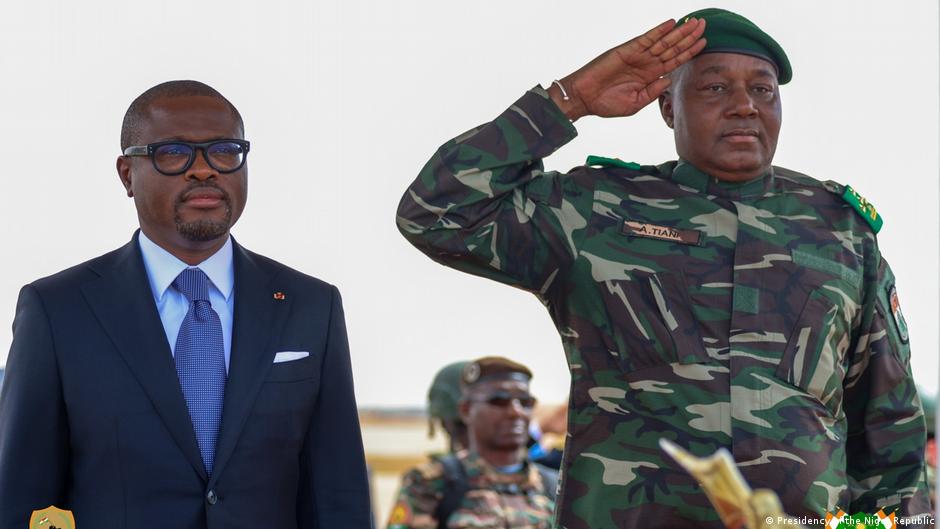
Niger-Cédéao tensions: resolving a three-year diplomatic impasse
When the coup unfolded on July 30, 2023, the Economic Community of West African States (Cédéao) swiftly condemned the power grab and demanded the restoration of President Mohamed Bazoum. The bloc imposed sanctions and even threatened military intervention, framing its response as a defense of constitutional order.
The following day, the Cédéao ultimatum was met with fierce resistance from neighboring military-led governments in Mali and Burkina Faso. Together with Niger, these nations would later form the Alliance of Sahel States (AES), marking their formal withdrawal from Cédéao in January 2025. Yet despite this rupture, channels of communication remain open between the two sides.
Lansana Kouyaté takes the lead in mediation efforts
International relations analyst Pape Ibrahima Kane notes that the AES countries have accepted the appointment of former Guinean Prime Minister Lansana Kouyaté as the primary mediator in negotiations with Cédéao. During a recent summit in Freetown on July 18, 2026, Cédéao instructed its new Commission President, the Senegalese diplomat Birame Diop, to prioritize security discussions in the initial talks.
“We are at the beginning of a highly promising process. Both sides are aligned in their commitment to dialogue,” Kane observed. He emphasized that Niger’s unique situation—its reliance on Nigeria and Benin for electricity and access to the Port of Cotonou—would be a key focus for Kouyaté. The mediation effort aims to address both Niger’s specific needs and the broader relationship between the AES and Cédéao.
Diomaye Faye and Wadagni steer diplomatic thaw
The appointment of Bassirou Diomaye Faye as Cédéao’s rotating president and the election of Romuald Wadagni as Benin’s leader have injected fresh momentum into reconciliation efforts. Faye visited the AES countries shortly after his election in May 2024, while Wadagni made Niger his first official destination after taking office, followed by visits to Burkina Faso and Mali.
Kane highlights that these new leaders differ markedly from their predecessors, who were often criticized for being out of touch with regional realities. “They are better positioned to engage with the AES,” he said, adding that Cédéao’s incoming leadership in Abuja is also expected to adopt a more pragmatic approach.
Bazoum’s fate and EU’s balancing act
Sahanine Mahamadou, a senior advisor to former President Bazoum, argues that Cédéao has consistently sought dialogue, but the military leadership in Niamey has resisted. “If these leaders truly care about their country, they must pave the way for civilian governance. Times have changed; military rule is no longer sustainable in our states,” he asserted.
The detention of Mohamed Bazoum and his wife has drawn sharp condemnation from the European Parliament, which passed a non-binding resolution in March calling for their immediate release. Niamey dismissed the resolution as meddling, underscoring the sensitivity of the issue.
Jérôme Pigné, founder of the Sahel Security Strategic Reflection Network, points out the EU’s dilemma: balancing its core values with the need to maintain relations with Niamey. “The illegal detention of President Bazoum is a stumbling block, but the EU must clarify its priorities. Is realpolitik the path forward, or will principles prevail? It’s a delicate balancing act—no one has found the solution yet.”
Pigné notes that Niger has long been a key EU partner, and Brussels is rethinking its cooperation framework with the country and its neighbors. While dialogue continues, the EU is exploring avenues for stabilization, including enhanced military cooperation, intelligence sharing, and capacity-building for security forces. A March report by the German Institute for International and Security Affairs (SWP) suggested that Europe could offer substantial support to stabilize the region, provided it engages constructively with the current regimes.
The report underscores that the EU should not expect immediate behavioral changes from the military juntas but should instead focus on long-term stability through political and social dialogue.