
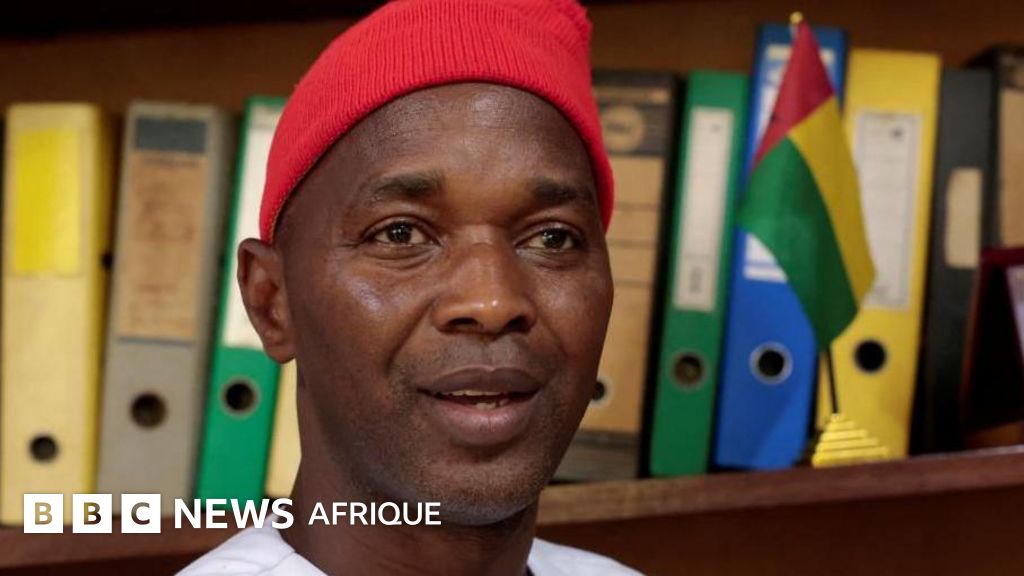
Nigeria has granted asylum to Fernando Dias da Costa, a leading presidential candidate in Guinea-Bissau, amid a political crisis following a disputed election and subsequent military takeover.
Fernando Dias da Costa, presidential candidate in Guinea-Bissau.
Why Nigeria granted asylum to Dias
Yusuf Tuggar, Nigeria’s foreign minister, announced that President Bola Tinubu approved the asylum request after Dias faced threats to his safety. The 47-year-old candidate, representing the Partido para a Renovação Social (PRS), had been under protection at the Nigerian embassy in Bissau following violent unrest.
The minister emphasized Nigeria’s commitment to defending democratic principles in Guinea-Bissau, stating in a letter to Alieu Omar Touray, head of the ECOWAS Commission, that the move underscores “our unwavering dedication to safeguarding the democratic aspirations and sovereign will of the people of Guinea-Bissau.”
The letter also requested ECOWAS troops stationed in the country to reinforce security at the Nigerian embassy to ensure Dias’ protection.
Political backdrop: a disputed election and military intervention
Guinea-Bissau’s recent presidential election, held on November 23, saw both Dias and incumbent Umaro Sissoco Embaló claim victory. The dispute escalated three days later when the military suspended the electoral process, citing an alleged plot to destabilize the country. The army imposed strict measures, banning all protests and activities deemed disruptive to peace and stability.
The African Party for the Independence of Guinea and Cape Verde (PAIGC), which had been barred from fielding a candidate, reported that its headquarters in Bissau was “illegally seized by heavily armed militias” following the coup. Party leader Domingos Pereira was arrested on the day of the coup, according to family and party officials.
The ECOWAS delegation, led by Sierra Leone’s foreign minister Alhaji Musa Timothy Kabba, held tense mediation talks with the military junta. While Kabba described the discussions as “productive,” he acknowledged that “both parties expressed their concerns” during the negotiations.
Transition government and regional response
The junta has appointed General Horta N’Tam as transitional leader, slated to oversee a one-year government. In response, ECOWAS has suspended Guinea-Bissau from all decision-making bodies until constitutional order is restored.
Questions linger about the coup’s true motives. Some observers, including Senegalese Prime Minister Ousmane Sonko and former Nigerian President Goodluck Jonathan, have suggested it may have been staged. Local civil society groups accused Embaló of orchestrating a “self-coup” to avoid releasing election results if he lost.
Embaló, who has faced prior allegations of using crises to suppress dissent, has not responded to these claims. He fled to neighboring Senegal on Thursday and reportedly traveled to Congo-Brazzaville over the weekend.
Guinea-Bissau’s turbulent political history
Since gaining independence from Portugal in 1974, Guinea-Bissau has experienced at least nine coups or attempted coups. The country, situated between Senegal and Guinea, is notorious for drug trafficking and the significant influence wielded by the military.