
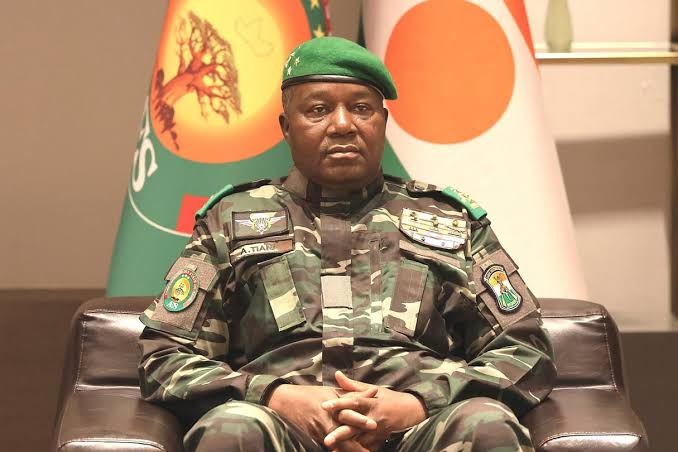
The Niamey regime has just crossed an irreversible threshold in political cynicism. While the National Council for the Safeguarding of the Homeland (CNSP) built its entire propaganda around the notion of “rediscovered sovereignty,” the tragic events of the night of August 28 to 29 in Niamey have shattered General Abdourahamane Tiani’s carefully crafted image. Faced with a mutiny by soldiers at Base 101, the regime made no hesitation in deploying foreign paramilitary forces to neutralize—and even eliminate—its own Nigerien comrades in arms.
This decision to enlist external mercenaries to spill the blood of its own military personnel is no longer a matter of strategic blunder. In any functioning state, turning against one’s own troops with foreign assistance is unequivocally an act of high treason.
Empty rhetoric of sovereignty
Since July 2023, the military junta has incessantly repeated the same mantra: expelling traditional partners in the name of national dignity, rejecting foreign interference, and restoring the voice of Nigerien armed forces. Yet the chaos of that fateful night paints a starkly different picture.
By summoning foreign contingents to suppress rebellious Nigerien soldiers in the very heart of the capital, General Tiani has exposed a glaring and painful contradiction:
- Distorted sovereignty: Sovereignty does not mean replacing one form of control with mercenaries. When a head of state requires foreign troops to protect himself from his own people and army, his power ceases to be sovereign and instead becomes a proxy occupation force.
- Outsourcing national security: The regime has traded its independent chain of command for total security dependence on external interests. Rank-and-file soldiers now watch with bitterness as foreign forces become the true arbiters of political life in Niamey.
When the Nigerien army becomes the regime’s target
How could a regime born within the barracks stoop to ordering fire upon its own troops? The answer lies in the structural paranoia of exceptional regimes. Having lost the trust of garrisons exhausted by three years of an endless transition and deteriorating security conditions, the junta began to view every Nigerien soldier as a potential enemy.
By deploying mercenaries to suppress rebellious soldiers, General Tiani has shattered the fundamental trust pact between commander-in-chief and troops:
- A crime against the institution: Spilling the blood of national soldiers through foreign hands on native soil shatters army cohesion and plunges the armed forces into an unprecedented identity crisis.
- Erosion of military legitimacy: The narrative of “national redemption” has collapsed. The regime is no longer fighting terrorism at the borders—it is waging war against the Nigerien army at the heart of the capital.
The verdict of history
By actively aligning with a foreign power against his own brothers in arms, General Tiani has trapped himself. The myth of the “patriotic general” dissolved in the gunfire of Niamey.
Today, the Niamey regime is confronting the harshest truth of foreign-dominated regimes: when sovereignty is bartered away to preserve personal power, the leader loses both authority and the respect of the barracks—and stains the nation’s honor. History will remember that those who claimed to liberate Niger are the very ones who made foreign hands spill the blood of its soldiers.