
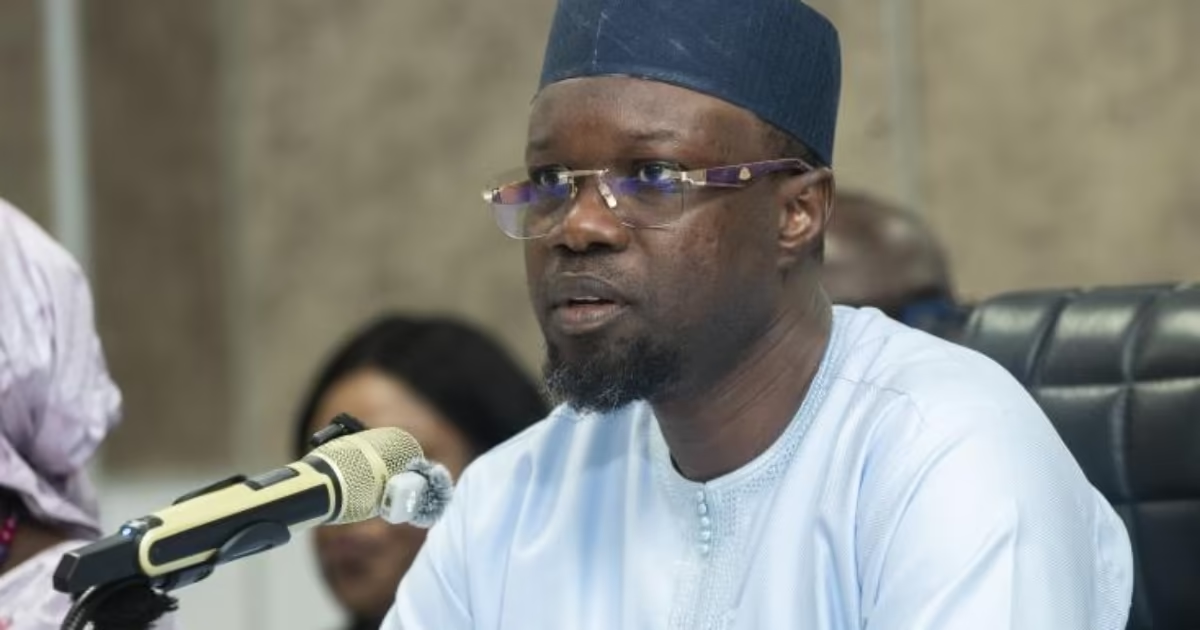
During a gathering in Dahra Djoloff last Saturday, Ousmane Sonko, President of Senegal’s National Assembly, delivered a scathing critique of what he describes as the resurgence of the former regime’s practices within the presidential palace. Addressing a crowd of mobilized activists, he questioned how long-time allies could betray their core commitments to the Senegalese people once in power.
« This isn’t about individuals—it’s about respecting our promises and the principles outlined in our manifesto: transparency, good governance, accountability, fair justice, and renegotiating resource management, » he emphasized, reiterating the foundational values of an initiative meant to break from past failures.
Sonko’s sharp critique of institutional shifts
The speech took a sharp turn when Sonko addressed the perceived reconfiguration of state institutions. « Regrettably, the very system we sought to dismantle has reorganized itself within the palace, reverting to old habits, » he declared, accusing the current leadership of abandoning their electoral promises.
He went further to argue that the government’s reliance on institutions over popular sovereignty signals a dangerous trend. « Today, Diomaye has built a party without an electoral base yet commands the institutions. In a democracy, sovereignty belongs solely to the people—not to bureaucratic structures, » he asserted, implying that a power disconnected from its grassroots base may over-rely on state machinery to sustain itself.
Concerns over judicial independence
Sonko also raised alarms about alleged attempts to control high courts. According to his account, maneuvers are underway to ensure the Supreme Court and Constitutional Council « serve specific interests »—a move he framed as concrete evidence of the palace’s systemic reorganization, six years after the promised political shift.