
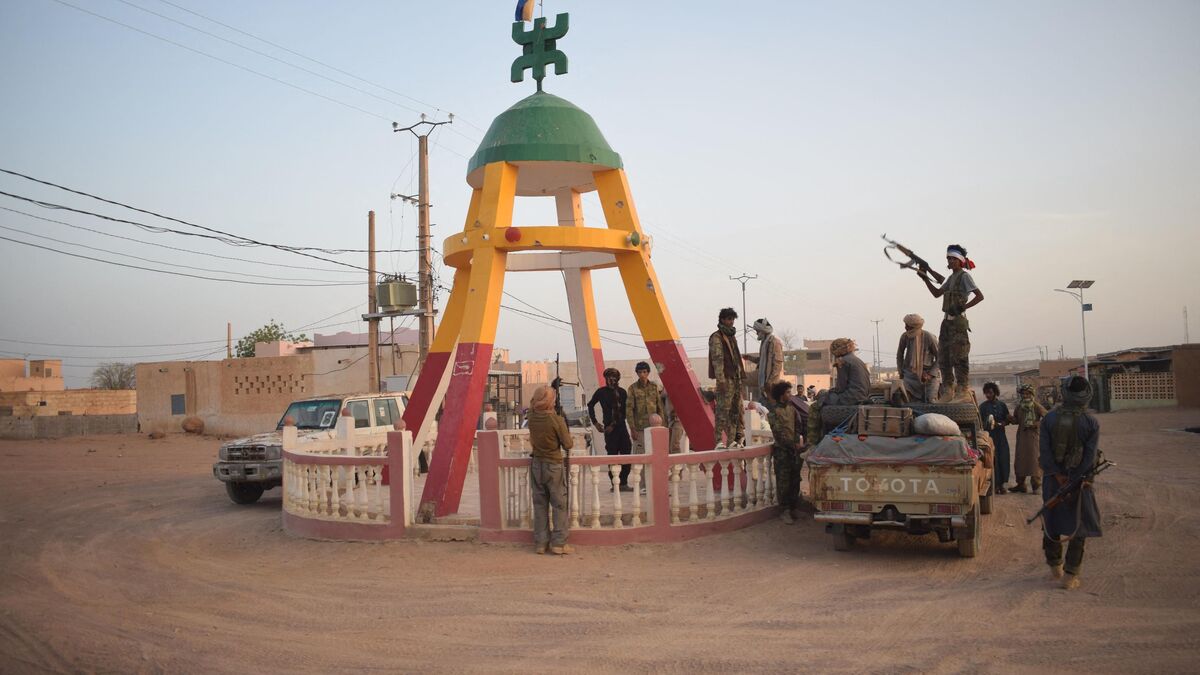
In a dramatic turn of events, a Africa Corps outpost in Mali has fallen to a coalition of Touareg rebels and jihadist forces, marking a significant shift in the power dynamics of the conflict-ridden nation. The withdrawal of this Russian-backed paramilitary group from the strategic stronghold of Kidal signals both a tactical retreat and the evolving nature of Moscow’s military presence in the Sahel.
The Africa Corps, often described as one of Russia’s most enigmatic military entities abroad, has been a key player in propping up the Malian junta since the collapse of the infamous Wagner Group. Unlike its predecessor, which operated with a degree of autonomy, the new militia is tightly controlled by the Kremlin, reflecting Russia’s strategic pivot toward Africa.
From Wagner to Africa Corps: a strategic rebranding
The transition from Wagner to Africa Corps was not merely a change of name but a deliberate restructuring of Russia’s African operations. Launched in late 2023, the group emerged under the leadership of Igor Korotchenko, a former colonel and Kremlin-aligned military analyst, and Younous-bek Evkourov, Russia’s deputy defense minister. The move followed the turbulent demise of Evgueni Prigojine and Dmitri Outkine, the founders of Wagner, whose deaths in a mysterious plane crash in August 2023 left a power vacuum.
The naming of Africa Corps is no coincidence. It draws a deliberate parallel to the Afrikakorps, the German military unit that fought in North Africa during World War II, symbolizing a historical echo of foreign intervention on the continent.
Clear objectives: sovereignty and resource control
From its inception, Africa Corps has made its intentions plain. Igor Korotchenko outlined the group’s mission as conducting large-scale military operations to help African nations break free from neocolonial dependencies, eliminate Western influence, and secure full sovereignty. This agenda aligns closely with the Kremlin’s broader geopolitical ambitions on the continent.
Unlike Wagner, which gained notoriety for its brutal tactics and alleged war crimes, Africa Corps presents itself as a more disciplined and state-aligned force. Its strategy revolves around forging alliances with sympathetic governments by offering military support, training, and equipment. This approach has allowed it to establish a foothold in multiple countries, including Burkina Faso, Libya, Sudan, the Central African Republic, and Niger.
Africa Corps in Mali: a critical but contested role
Since 2024, Africa Corps has taken over Wagner’s operations in Mali, deploying hundreds—if not thousands—of fighters to bolster the junta in Bamako. The group’s primary mission has been to suppress Touareg rebellions and jihadist insurgencies while countering the diminishing influence of Western powers, particularly France, which has largely withdrawn from the region.
Moscow’s objectives in Mali extend beyond mere military support. The Kremlin seeks to secure control over critical migration routes and exploit the country’s vast mineral resources, including gold and uranium. This strategy not only strengthens Russia’s economic foothold but also enhances its geopolitical leverage in West Africa.
Despite its more subdued tactics compared to Wagner, Africa Corps has not escaped international scrutiny. In 2024, the United Kingdom imposed sanctions on the group, accusing it of widespread human rights abuses across Africa and exploiting local resources for profit. These allegations underscore the controversial nature of Russia’s expanding military footprint on the continent.
The fall of Kidal to rebel forces marks a turning point, but it does not spell the end of Africa Corps. With its centralized command structure and Kremlin backing, the group remains a formidable player in the Sahel, poised to adapt to new challenges as the region’s conflicts evolve.