
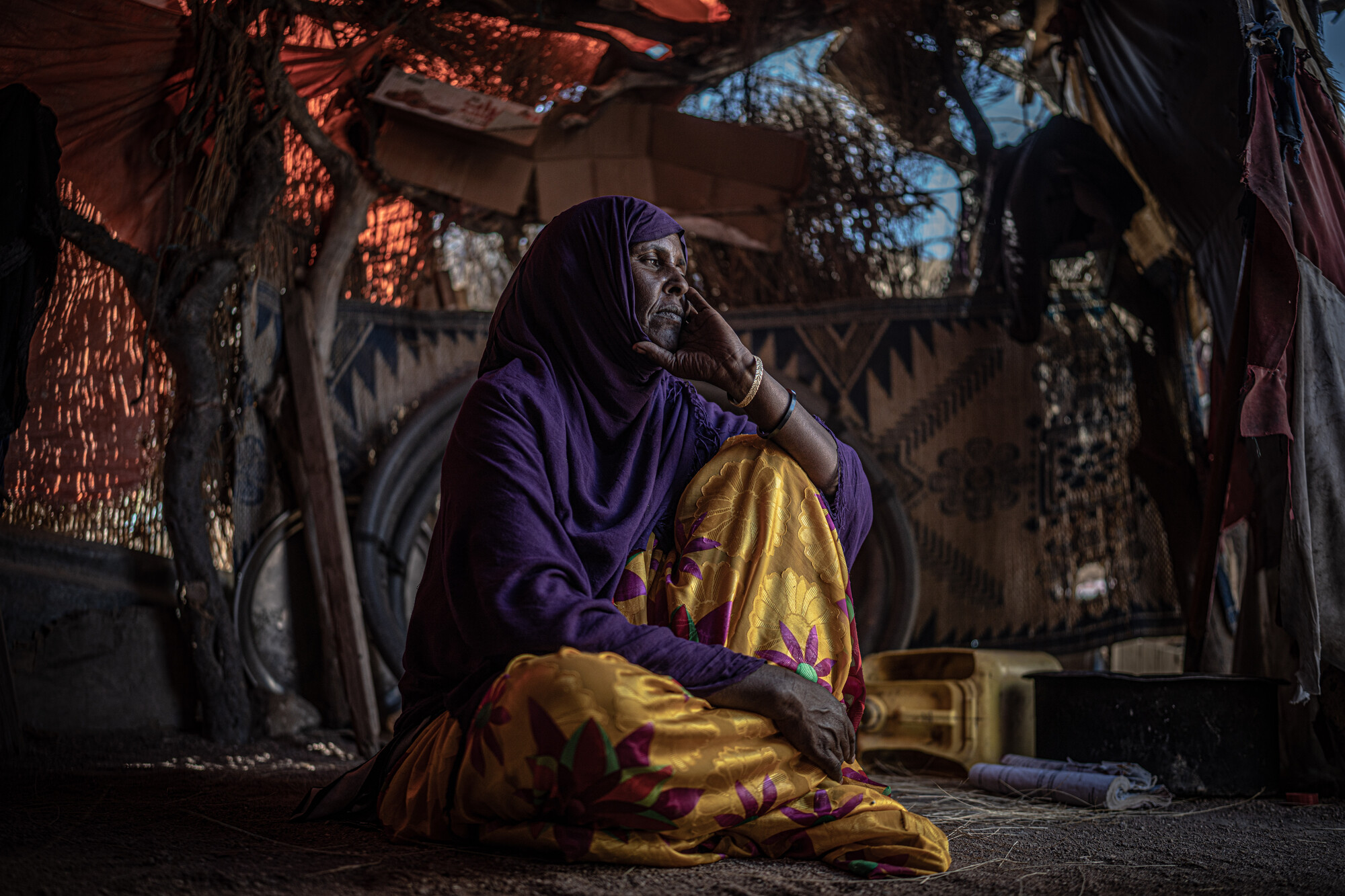
unprecedented hunger crisis grips the Sahel and horn of africa
the Sahel region and the horn of africa are grappling with a cascading series of crises that threaten millions of lives. extreme poverty, deep-seated inequalities, climate change, the lingering economic fallout from covid-19, and soaring costs of food, fuel, and fertilizers have converged into a perfect storm. these pressures are pushing vulnerable communities to the brink of survival.
in the central Sahel—encompassing Mali, Niger, and Burkina Faso—an estimated 7.2 million people face acute food insecurity in 2024. simultaneously, across the horn of africa, 31.5 million people in Ethiopia, Kenya, Somalia, and South Sudan are battling hunger, exacerbated by relentless drought conditions. in Somalia and South Sudan, the crisis is most severe, with one in two individuals suffering from food shortages.
– key figures –
1 in 2 people
face starvation in Somalia and South Sudan
45.74 million
require urgent humanitarian aid across Ethiopia, Kenya, Somalia, and South Sudan
24 million
lack access to clean water in Somalia, Ethiopia, and Kenya, fueling disease outbreaks like cholera and measles
– watch now –
Oxfam is providing critical support in both the horn of africa and the Sahel, delivering life-saving aid in water, sanitation, and healthcare. these emergency interventions are paired with long-term resilience programs to help communities adapt to climate shocks.
donate nowthe escalating food crisis in africa’s Sahel and horn
a humanitarian emergency of historic proportions
two of the world’s most severe humanitarian crises are unfolding in africa today. the central Sahel—including Mali, Niger, and Burkina Faso—is experiencing the fastest deterioration of conditions globally. 25% of the sahelian population, or 24 million people (including Chad), urgently need shelter, clean water, food, healthcare, education, and protection from violence and discrimination.
at the same time, 31.5 million people across Kenya, Ethiopia, South Sudan, and Somalia are trapped in high levels of acute food insecurity. in Somalia alone, 6.5 million individuals (40% of the population) are affected, with tens of thousands already experiencing famine or on the brink of collapse. in South Sudan, over half the population—7.7 million people—struggles with extreme hunger.
climate change as the driving force behind the crisis
Mali is enduring its worst food and nutrition crisis in a decade, a situation that could worsen rapidly due to early pastoral and agricultural seasons, depleted reserves, degraded pastures, and rising prices. similar pressures in Niger have slashed cereal production by nearly 40%, while climate-related conflicts have crippled harvests of staple crops like millet and sorghum. if global warming exceeds 2°c, these yields could plummet by another 25%. in Burkina Faso, cereal production is projected to drop by 15% to 25% due to rising temperatures.
the horn of africa—Somalia, South Sudan, Ethiopia, and Kenya—is experiencing its worst drought in memory. 2023 marked the sixth consecutive year of inadequate or absent rainfall in some areas, with grim forecasts for 2024. as a result, famine levels in Somalia and South Sudan are expected to peak in early 2024. the situation is compounded by the fact that when rains finally arrive, the parched soil cannot absorb the water, leading to devastating floods. in 2023, heavy rains triggered catastrophic flooding that killed dozens and displaced 350,000 people across Ethiopia, Kenya, and Somalia, submerging over 1,000 hectares of farmland and crippling local economies. climate models predict that the upcoming rainy season (march to may 2024) will be drier than usual, prolonging drought conditions in parts of the region.
how inequality deepens the hunger crisis
the Sahel is rich in human potential but plagued by multidimensional crises. deep inequalities fuel conflicts across the region—political instability, forced displacement, economic disparities, climate vulnerability, food insecurity, and insecurity. women, particularly female farmers, are disproportionately affected due to entrenched patriarchal norms. in Mali, where over 50% of women work in agriculture, only 5% own land—a stark illustration of systemic gender discrimination.
“this collective farm has given me a lifeline. as a widow raising eight children, my yields were shrinking with each passing year due to erratic rainfall and longer dry seasons. with the support of ATAD and Oxfam, I’ve learned sustainable farming techniques and gained access to a plot of land. now, I grow diverse crops and contribute to my community’s food security.”
Alizeta Sawadogo, 55, farmer from Burkina Faso
despite the growing food insecurity crisis, funding for climate-vulnerable regions like Burkina Faso and Niger remains critically insufficient. a study by Oxfam reveals that between 2000 and 2021, donors provided less than $20 billion of the $31.6 billion requested by the UN for the ten most climate-exposed countries—covering only 40% of the need. the G7 and Russia alone account for 85% of global emissions since 1850, emitting 850 times more than Kenya, Ethiopia, Somalia, and South Sudan combined.
oxfam’s lifesaving interventions and advocacy efforts
on-the-ground action to combat hunger and climate impacts
between march 2022 and april 2023, Oxfam assisted 850,000 people in the horn of africa. in 2024, the organization aims to reach 1,309,694 individuals affected by drought, including 420,000 in Somalia and Somaliland.
Oxfam’s core interventions in the horn of africa:
- food assistance: when markets permit, oxfam provides cash, vouchers, or direct food aid to meet nutritional needs. the organization also supports agricultural projects by supplying drought-resistant seeds, tools, livestock fodder, and veterinary care, alongside training in climate-resilient farming techniques.
- water and sanitation: ensuring communities have reliable access to clean water, sanitation, and hygiene products to reduce health risks and prevent disease outbreaks.
- protection: tailored responses include hygiene kits, soap-making training, and sewing machines to improve living conditions, particularly for women and girls.
advocating for systemic change
Oxfam highlights the links between inequality, food insecurity, and climate change, calling for bold political action. urgent measures are needed to address the twin crises of climate and hunger. a 1% tax on the annual profits of fossil fuel companies could generate $10 billion—enough to cover most UN humanitarian funding gaps for food insecurity. debt cancellation for vulnerable nations would free up resources to invest in climate adaptation, while France and other donors must ensure humanitarian response plans are fully funded to meet urgent needs.